
A Cyclist in Need
is a friend indeed

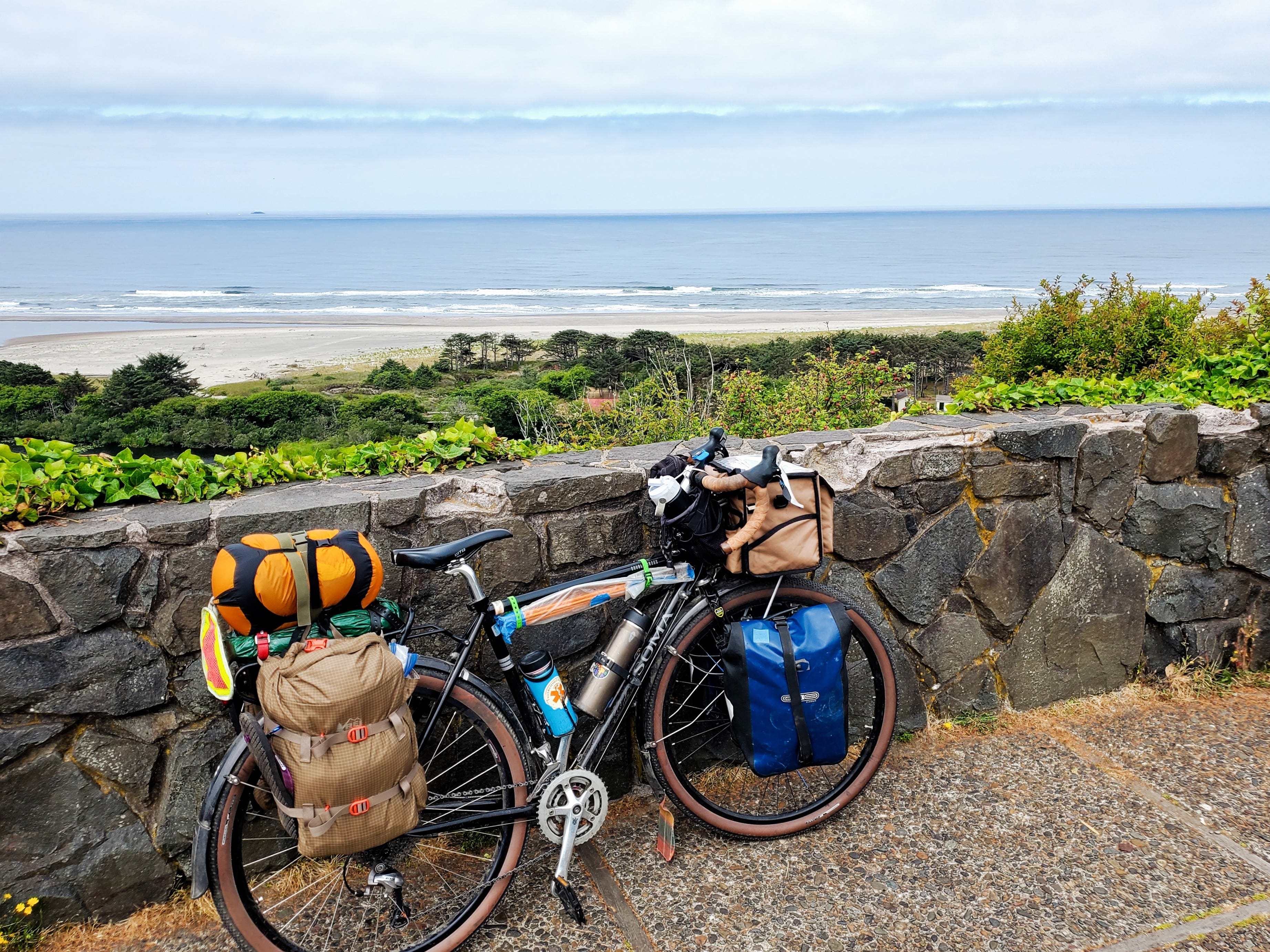
It’s day fourteen (maybe fifteen?) biking southbound on the Pacific Coast bike route, somewhere in central Oregon.
I’ve lost track of time somewhat, and that is a good thing. It takes a while to transition into a mentally checked-out state from your normal life, to be fully immersed in the journey.
It’s also a good thing to have reached the point when things have smoothed out, and the rough start has given way to mostly stress-free travel. The routines and logistics of each day are realized, and there’s less concern for the hiccups that come along.
As such, life is good. I love spinning my legs – propelling myself while enjoying the great vistas, thinking, and allowing the day to unfold as it will without worry.
Being July, it’s prime bike touring season here on the coast, and other two-wheeled adventurers are sprinkled up and down the 1,852-mile route from Canada to the Mexican border.
We are solo (like me) or in small groups, spread out by miles, days or weeks.
Southbound is the preferred direction. The cross-tail wind is a nice boost and can lend you a hand all the way to Baja if you have time to go that far.
Most of the time I look forward to meeting my biking comrades, depending on my current disposition. I can get cranky as much as anyone, and in those moments, I keep to myself.
But either way, when you see a cyclist up the road you take notice, as is happening just now.
Looking ahead, I crinkle my nose and squint my eyes. All I can see is the nondescript shape of someone riding.
Eventually I’m happy to see that I’ll be overtaking a fellow bike tourist. Nothing against locals on a day ride, but we long-haulers have an un-spoken kinship.
An unzipped fluorescent jacket flops in the sea breeze. Rear panniers are over-stuffed, and a rear rack holds a large bundle under tightly bound straps.
I allow a healthy gap as I pass and offer a “Howdy, hope you’re having a good ride today.”
No response.
Ok, I thought. Not every day on a long bike tour is all rainbows and unicorns. Surprises on the road come in all flavors, including sweet and salty. I can relate.
I’ve not seen another south-bounder in a few days, so it’s nice to see one out here on the annual summer migration down the coast.
But I know there are others nearby even if I’ve not seen them. Every day, we struggle up the mountain passes, converge to cross bay bridges then split and weave through the next town.
The route between communities stays mostly on the main road, but inside city limits we head to the side roads, the cut-throughs, the hidden bike ways and other connectors that are beyond the normal awareness of the locals.
But there are some perceptive residents who know what’s going on. They’ve anticipated the summer influx of cyclists.
Bike shop employees are ready to help with parts and repairs. The Quickie-Mart managers start to see the familiar sight of packed touring bikes leaned against their front windows plastered with advertising for cold beer and lottery tickets.
Then there are the Park Rangers manning the entry booths at the many coastal campgrounds. They see the tired and weary show up every summer evening and know the drill.
“The biker campsite is over there. The showers are over here. The closest market is two miles down that way. Eight dollars a night, ten if you’re from out of state.”
It’s early afternoon and I’m on a gravel path – very close to the beach looking for a place to rest, eat, and get off the rolling machine for a bit.
I scarf down a typical pile of eclectic food for someone on this journey. Daves Killer wheat and raisin bagels slathered with peanut butter and honey. Potato chips. Trail mix chock full of berries. Lots of water with electrolyte mix.
I take a cat nap under the shade of a stunted fir tree. Voices of excited families plodding down to the beach serve as a backing soundtrack for my twenty-minute snooze.
Later, I’m back at it, on bike, on route, southbound.
I’m pointed to Washburne Memorial State Park campground. It’s a ways off, but the miles tick by.
I revel in the warm sun, the efficiency and quiet of “Mi Sombra”, my black bike. To me, this is a luxurious life. Why are not more capable people out here doing this?
My mind shifts to finding a market near the campground for dinner provisions as well as the next day’s miles.
My thoughts are quicky side-lined as I spy another cyclist up ahead. This one is off bike, sitting on the side of the road.
Wait. It’s the same guy as before. While passing by, I again asked about his ride.
“Egh!” is the reply.
Message received, I thought. I get a quick glance at our despondent rider. An older gent with a tired look.
I nearly spun around - but thought better of it. I have been on the side of the road, fussy and frustrated with a bad day. Not once did I wish to be baby-sat by a fellow cyclist. Onward and southward, I go.
Good luck sir, I think to myself.
At Washburne, I rolled into the camp area just for cyclists. Very wooded and shady. The earth is damp. The place is empty and I’m the first to arrive.
The end-of-day process begins: Tent-setup routine, kitchen assembly, and a few other chores.
Then finally I grab my camp clothes, toiletry bag and head to the showers for a hot transformation of body and spirit.
Arriving back to camp, to my surprise, I find the dispirited cyclist has set up his camp.
“I think I passed you out there today.”
“Twice”, he replied.
“A bad day in the saddle?”
“Something’s wrong with my rear wheel. A plastic part is broken.”, he was quick to respond.
“Oh really?” I couldn’t think of what that could be.
Back at my tent, I ignited my water boiler, stretched a line to hang up my wet bike clothes, poured a cup of green tea and headed back to see about this wheel problem.
I can’t help myself when it comes to mechanical issues out on the road or trail. I have this nagging urge to take a look and come up with a strategy for a quick fix or permanent repair – whether it’s my bike or not.
It’s a knack and I’m usually pretty good at diagnosing problems. The beauty of a bike is that there are few hidden secrets. All the mechanical systems are in plain sight.
Sure, you might have to put the bike on a repair stand – or if out on a tour, turn it upside down – but mysterious creeks, squeaks, thumps, rattles or other sensations usually give up the ghost fairly quickly.
Diagnosis is only half of the problem, though. The other is actually making a fix with whatever tools and materials you have on hand.
For the most part, I’ve always been able to come up with something.
“So, what exactly is wrong with your wheel? Do you mind if I take a look?”, trying not to sound too intrusive.
He knelt down next to the back of his bike. I did the same.
“It’s the plastic disc behind the cassette. It broke and is binding up the wheel. It won’t coast.”
To get a better view, he started to remove the drive-side pannier, but it got hung up on something.
I put down my tea and lifted one end so that the bags’ spring-clamps lifted off the rack rail.
Looking at the bag, I recognized the brand immediately, a top-of-the-line model, but one of the oldest and well-worn examples I’ve ever seen.
Grant Peterson over at Rivendell Bicycles has coined the term “Beausage”, a combination of the words Beauty and Usage.
He describes it as anything that has the marks, stresses or visual wear that would come from using an item as intended. Beauty emerges through use and develops a certain desirable patina. I love the word and agree with the concept.
These bags were a prime example and my impression of him started to shift. Certainly, only an experienced cyclist would have carried these panniers long and far enough for them to earn such visual grace.
With the bag removed, I could see the plastic, the problem, and the solution.
Between the innermost cog and the spokes of the rear wheel lies a gap. If your derailleur ever got out of adjustment to the point of mistakenly shifting your chain beyond the last gear into that gap, bad things will happen. And they’ll usually happen instantly.
Enter the “dork disc”. It’s a specially shaped plastic disc with a center hole so it slips on to the wheel before the cassette is mounted. Its job is to block the chain from getting down that gap – where it would get horribly stuck, damage the chain and probably eat into the spokes as well.
Bike snobs will turn up their noses at the disc, since they know that if you keep your derailleur properly adjusted, this silly plastic safety device is not needed.
Besides, they’ll also decry its ugliness. These are the same cyclists that eschew kickstands, sometimes helmets and leg hair too. But that’s another story.
For the rest of the us out there, it’s a forgotten part that can prevent you from getting into a literal jam.
But now, looking at how it had cracked, partially dislodged itself and was causing so much chaos in preventing the wheel from spinning freely, this particular dork disc was living up to its reputation as a useless piece of cheap plastic.
“If we cut it out, your wheel will be free again. Besides, you don’t really need it anyway if the derailleur has its lower limit set correctly.”
“That’s what I was thinking.”
Within a few moments we were shoulder to shoulder both tugging and yanking at its greasy edges.
“Hold on a second.” I headed back to my repair kit, returning with my multi-tool with extended plyers.
As the grime from the cassette worked its way up our forearms, we used the plyers to rip the disc in two – each half able to slide off easily.
“Wow, that’s great!” He gave the wheel a spin. It rotated with a smooth, clicky sound.
“Oh man, that’s music to my ears.” He grabbed a bunch of fast-food napkins, and we tried to remove as much of the grime as possible.
“If you’re worried about running it without the disc, you could stop at the next bike shop to have the derailleur checked.”, I said.
“There’s a shop across town.” he said while tossing the broken shards into his trash bag.
“Well, it’s dinner time for me. Hope you have a better day tomorrow.” I turned towards my campsite.
Over the course of cooking, eating, and clean-up, a few more cyclists appeared. I recognize Chris and Luke, two sites over. We had been leapfrogging every few days. They are new to bike touring and are on their longest trip so far, having a blast.
Luke caught my gaze and raised his plastic wine glass in a silent cheer’s motion. I gave him a thumbs-up.
I looked up to see the other guy had come over from his camp. He had a smile, and his demeanor was so much improved since I had passed him out on the road.
“Tell me about your tip so far”, he asked while taking a seat.
And so, we proceeded to have one of those impromptu yet memorable conversations that are often had when you’re the end of another day on the road.
I explained my rough start way up in British Columbia, crossing the border, riding in the rain to Bellingham, my first ever Warm Showers host and a side excursion off route to visit a long-lost cousin.
“Matt” updated me on his ride as well. He’s retired, 70 years old, and partakes in the Pacific Coast Route every summer – but there’s a twist.
He starts at his home in Portland and rides along the Columbia River then down the coast to the California border.
But after a few days in gorgeous Crescent City, he turns around to ride northbound back to Portland.
Yes, he does a complete “yo-yo” southbound then northbound. Every summer.
I thought back to his well-worn bike bags. This unassuming guy is a total bad ass.
Matt also shared some info about how to photograph a nearby lighthouse on the point, the closest laundromat in town, and how to get through the upcoming tunnel that has no shoulder.
These interactions create great moments while out on tour. They can be brief, yes, but so potent.
It’s early the next morning. I’ve started my camp teardown routine to get ready for the day’s ride. I’m packed and ready, but I couldn’t find Matt. His campsite was empty; he was up and out earlier than anyone - a habit of an experienced cyclist.
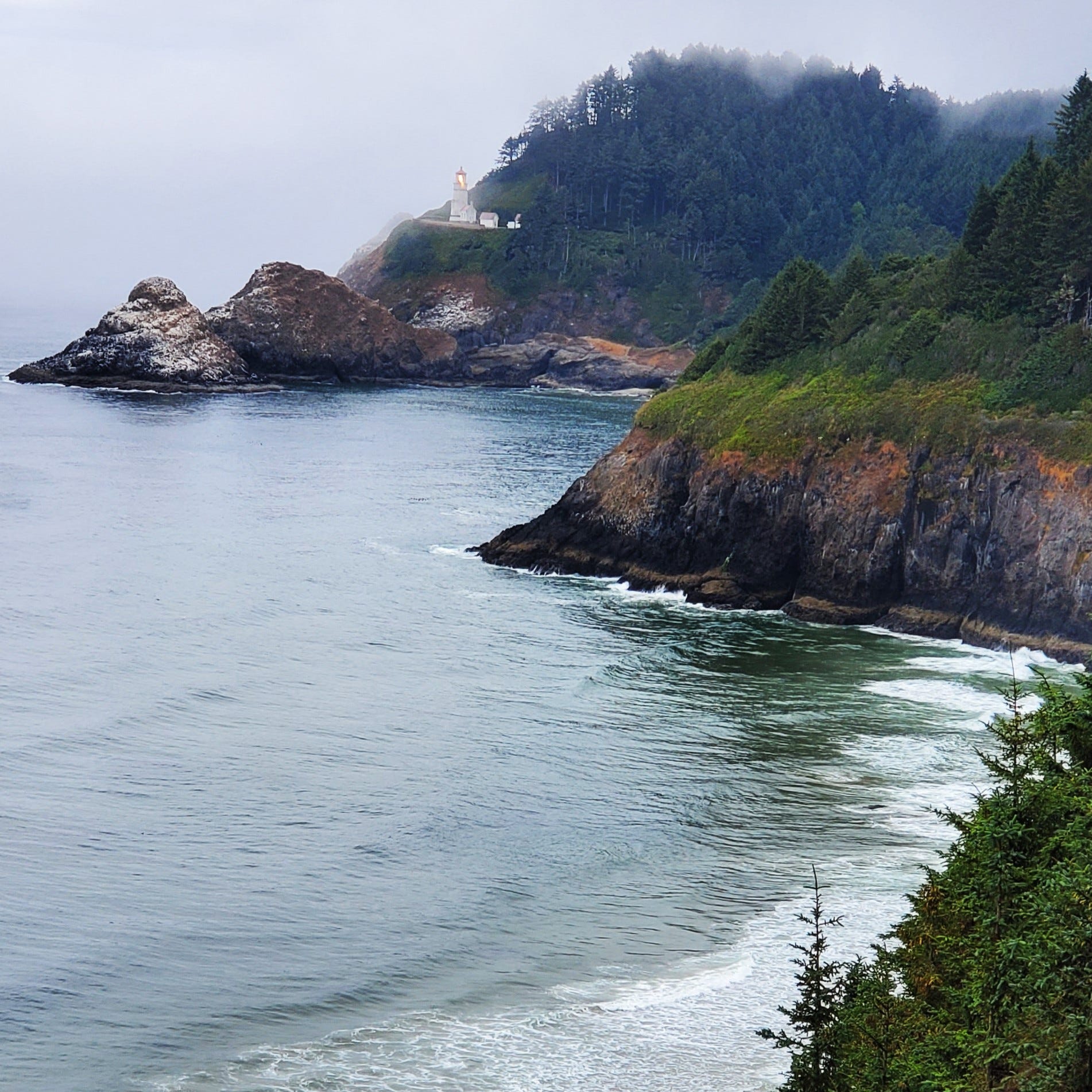
Later, out on the road, the lighthouse came into view through the fog. I pulled over to take it all in and get a few photos.
I realize that this is the exact spot Matt mentioned yesterday. There was much more to his story than just another cyclist heading down the coast.
Gaining insight into my fellow comrades gives me comfort and inspiration. It feels great to share the route with them, pushing ever southbound, a bond of cycling adventurers connected by shared passions and empathy for each hard-won mile.
I packed away my camera and chugged some water, checked my navigation then churned uphill towards the tunnel, looking forward to another day, alone but not lonely, grateful knowing there are riders behind me, others up ahead, and me - another cyclist happily taking his place somewhere in the convoy, all of us slowly moving south.
… … …
Learn more about the Pacific Coast Route here:
https://www.adventurecycling.org/routes-and-maps/adventure-cycling-route-network/pacific-coast
… … …
Great!